
If you’ve ever caught yourself hunched over your phone, laptop, or tablet for longer than you’d like to admit, you’re not alone. In today’s digital world, “tech neck” has become one of the most common posture-related complaints people bring into chiropractic offices. It’s more than just a stiff neck — it’s a modern lifestyle issue with real consequences for your spine, your comfort, and even your long‑term health.
What Exactly Is Tech Neck?
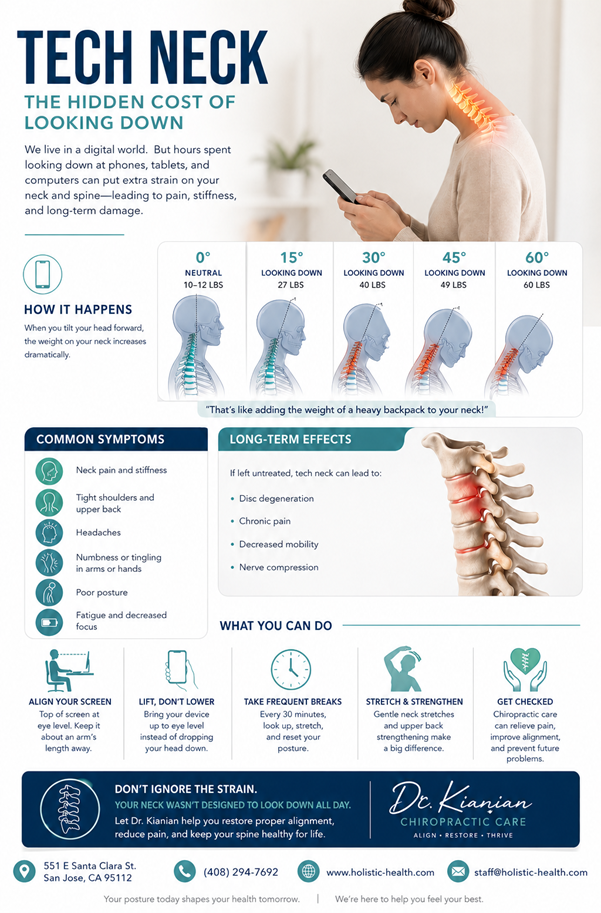
Tech neck refers to the strain placed on the cervical spine when the head is tilted forward for extended periods. Every inch your head moves forward increases the load on your neck muscles and joints. Looking down at a phone at a 45‑degree angle can place up to 49 pounds of force on the neck — the equivalent of carrying a small child around all day with your head.
Over time, this posture can lead to:
- Persistent neck and shoulder pain
- Headaches
- Upper back tightness
- Reduced mobility
- Early degenerative changes in the cervical spine
It’s not just discomfort — it’s a structural issue that can progress if left unaddressed.
Why Tech Neck Happens
Most people don’t realize how often they look down. Between texting, scrolling, working remotely, and binge‑watching, the average person spends hours each day in a forward‑head posture. The body adapts to what it does most often, and in this case, it adapts by tightening some muscles, weakening others, and placing stress on the joints of the neck.
How Chiropractic Care Helps
Chiropractic care is uniquely positioned to address tech neck because it focuses on restoring proper alignment, improving mobility, and reducing the muscular tension that builds up from poor posture.
Here’s how chiropractors typically help:
1. Spinal Adjustments
Gentle cervical adjustments help realign the vertebrae, reduce joint restriction, and improve overall neck function. Many patients notice immediate relief in tension and mobility.
2. Postural Correction
Chiropractors assess your posture and identify where imbalances are forming. They’ll guide you through corrective strategies to retrain your body into healthier alignment.
3. Soft Tissue Therapy
Tight muscles — especially the upper traps, levator scapulae, and suboccipitals — often need targeted release. Soft tissue work helps reduce pain and restore flexibility.
4. Strengthening and Mobility Exercises
To prevent tech neck from returning, chiropractors often prescribe exercises that strengthen deep neck flexors, open the chest, and improve upper‑back stability.
5. Ergonomic Coaching
Small changes to your workstation or device habits can make a huge difference. Your chiropractor can help you set up your environment to support better posture throughout the day.
Simple Habits to Reduce Tech Neck at Home
While chiropractic care addresses the root issues, your daily habits matter too. Try incorporating these:
- Hold your phone at eye level
- Take movement breaks every 30–45 minutes
- Strengthen your upper back and core
- Stretch your chest and neck regularly
- Use a supportive chair and monitor setup
These small adjustments can dramatically reduce strain on your neck.
The Bottom Line
Tech neck is a modern problem, but it doesn’t have to become your new normal. With chiropractic care, mindful posture habits, and a few simple lifestyle changes, you can relieve pain, restore mobility, and protect your spine for the long run. Your neck works hard for you — taking care of it is one of the best investments you can make in your overall well‑being.