
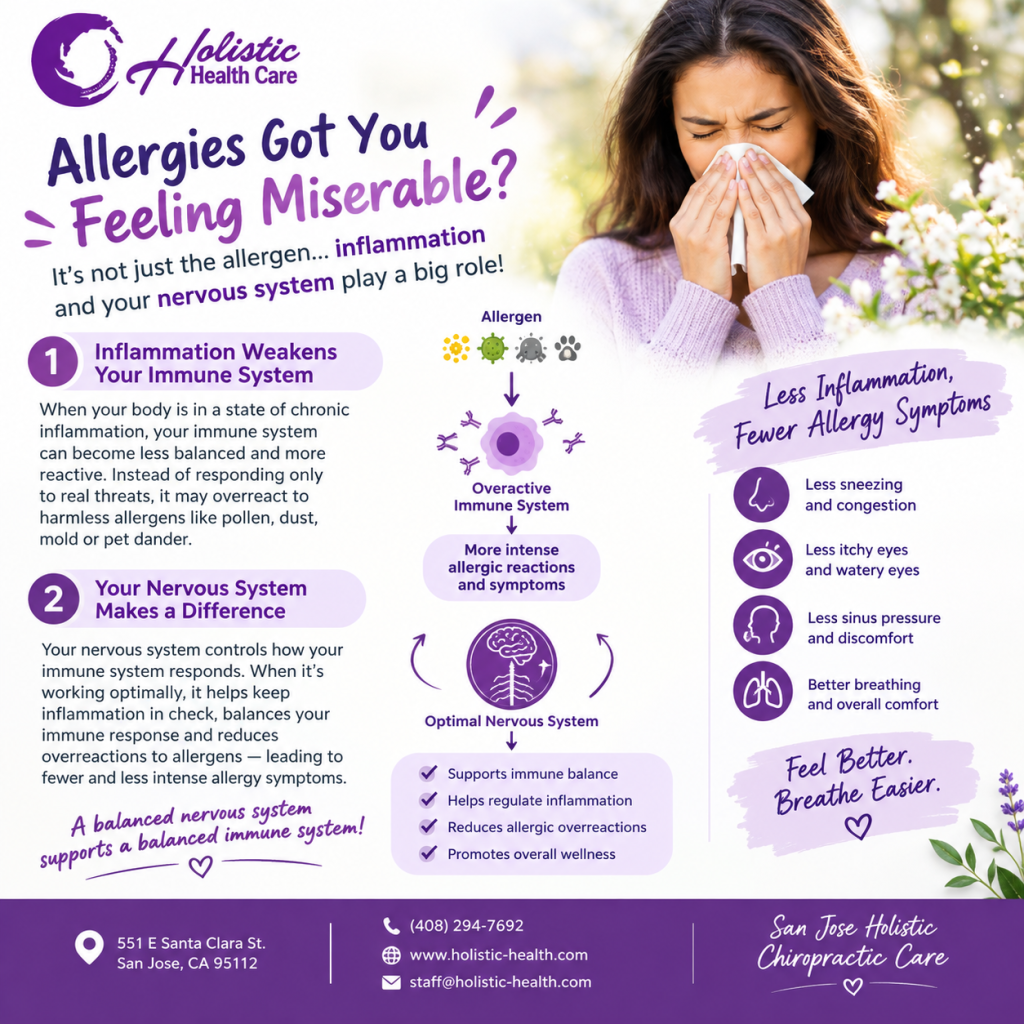
Sneezing, itchy eyes, congestion, sinus pressure, and a runny nose can make allergy season frustrating. For many people, allergies are more than a seasonal annoyance. They can affect sleep, energy, concentration, and overall quality of life.
But what is actually happening inside your body when you come into contact with pollen, dust, pet dander, or another allergen?
Your immune system, inflammatory response, and nervous system all play important roles in how your body detects and responds to allergens. Understanding how these systems interact can help you make informed decisions about your health and wellness.
What Happens When You Have an Allergy?
An allergy occurs when your immune system reacts to a substance that is generally harmless to most people. These substances are known as allergens.
Common Allergens
Common allergy triggers may include:
- Pollen from trees, grasses, and flowers
- Dust mites
- Pet dander
- Mold
- Certain foods
- Certain medications
When your body encounters an allergen, the immune system may launch a defensive response. This response can activate immune cells and release substances such as histamine, which contribute to many familiar allergy symptoms.
Common Allergy Symptoms
Depending on the allergen and individual response, symptoms may include:
- Sneezing
- Itchy or watery eyes
- Nasal congestion
- Runny nose
- Sinus pressure
- Nasal or throat irritation
How Does Inflammation Affect Allergy Symptoms?
Inflammation is part of the body’s natural defense system. It helps protect the body when it detects a threat, injury, or irritation.
During an allergic reaction, inflammation can cause swelling and irritation in the tissues lining the nose and sinuses. This inflammatory response can contribute to congestion, sinus pressure, and difficulty breathing comfortably through the nose.
It is important to understand that inflammation does not automatically mean that your immune system is weak. Allergies generally occur because the immune system is reacting excessively to a substance that would normally be harmless.
The relationship between inflammation and immune function is complex. Supporting overall health through appropriate healthcare, nutrition, physical activity, sleep, and stress management can be an important part of maintaining general wellness.
The Connection Between Your Nervous System and Immune System
The nervous system and immune system do not function independently. They continually communicate and influence processes throughout the body.
What Does the Nervous System Regulate?
The nervous system plays an important role in:
- Stress responses
- Sleep and recovery
- Communication between the brain and the rest of the body
- Sensory processing
- Reflexes such as sneezing
- Numerous automatic functions throughout the body
The nerves within the nose also help regulate sensations, secretions, and protective reflexes such as sneezing.
During allergic inflammation, these nerve pathways may become more sensitive or reactive. As a result, allergy symptoms involve more than the immune system alone. The nervous system also contributes to how the body senses and responds to irritation.
A healthy, properly functioning nervous system is important for overall health and the regulation of many normal body processes.
Can Chiropractic Care Help Support Your Nervous System?
At San Jose Holistic Chiropractic Care, we believe that supporting healthy overall body function can be an important component of a comprehensive wellness plan.
Chiropractic care focuses on the relationship among the spine, musculoskeletal system, and nervous system. It may help patients address certain musculoskeletal concerns that affect movement, physical comfort, and everyday function.
It is important to distinguish general wellness support from allergy treatment. Chiropractic adjustments have not been established as a treatment for allergies or as a method of directly reducing allergic reactions. Chiropractic care should be considered complementary wellness care and should not replace appropriate allergy evaluation or medical treatment.
How Chiropractic Care May Support Overall Wellness
Musculoskeletal Comfort
Chiropractic care may help address certain types of musculoskeletal discomfort, stiffness, and mobility concerns that can interfere with daily activities.
Nervous System and Body Awareness
Chiropractic care considers the relationship between the musculoskeletal and nervous systems. Healthy movement and musculoskeletal function are important components of overall physical wellness.
Healthy Lifestyle Habits
Wellness involves more than any single therapy. Quality sleep, appropriate physical activity, balanced nutrition, stress management, and routine healthcare all contribute to supporting overall health.
5 Ways to Support Your Body During Allergy Season
1. Identify and Reduce Allergen Exposure
If pollen, dust mites, mold, pet dander, or another allergen triggers your symptoms, reducing exposure may help.
An allergist or other qualified healthcare professional can help identify potential triggers and recommend appropriate avoidance or treatment strategies.
2. Prioritize Quality Sleep
Allergy symptoms can interfere with restful sleep, while inadequate sleep can affect energy, concentration, mood, and overall well-being.
Maintain a consistent sleep routine and speak with a healthcare provider if persistent congestion or other allergy symptoms regularly interfere with your rest.
3. Eat a Balanced, Nutrient-Rich Diet
A varied diet containing fruits, vegetables, whole grains, healthy fats, and adequate protein supports general health and nutrition.
No individual food or dietary supplement has been proven to prevent allergic reactions. Talk with an appropriate healthcare professional before making significant dietary changes or beginning supplements for a health condition.
4. Stay Active and Manage Stress
Regular physical activity and healthy stress-management strategies can support general physical and emotional well-being.
Choose activities appropriate for your health, fitness level, and current symptoms.
5. Get Appropriate Allergy Care
Depending on the type and severity of your allergies, a healthcare professional may recommend treatments such as antihistamines, nasal corticosteroids, allergen avoidance strategies, or other therapies.
If allergy symptoms are persistent or affecting your daily life, obtaining an appropriate medical evaluation is important.
When Should You See a Healthcare Professional?
Consider speaking with your primary care provider or an allergist if allergy symptoms are interfering with your:
- Sleep
- Breathing
- Work
- Exercise
- Concentration
- Daily activities
- Overall quality of life
When Is an Allergic Reaction an Emergency?
Seek emergency medical attention for symptoms of a potentially severe allergic reaction, including:
- Difficulty breathing
- Swelling of the throat or tongue
- Fainting or loss of consciousness
- Rapidly developing symptoms involving multiple areas of the body
Chiropractic care does not replace emergency medical treatment for an allergic reaction.
A Holistic Approach to Your Health
The body is an interconnected system. The immune system, nervous system, musculoskeletal system, and inflammatory processes interact in complex ways to support normal body function.
While chiropractic care is not an established treatment for allergies, maintaining musculoskeletal health, practicing healthy lifestyle habits, reducing known allergen exposure, and receiving appropriate medical care can all be part of a comprehensive wellness approach.
At San Jose Holistic Chiropractic Care, Dr. Guita Kianian is here to help you care for your body and support your overall well-being.
If you are experiencing discomfort, tension, stiffness, or other musculoskeletal concerns alongside seasonal allergy symptoms, contact our office to learn more about how chiropractic care may fit into your broader wellness plan.